Your records, your rules and the day’s jobs, in one place that does the work.
Stop keeping the farm in five places. The team keeps it in one, and drafts what needs doing.
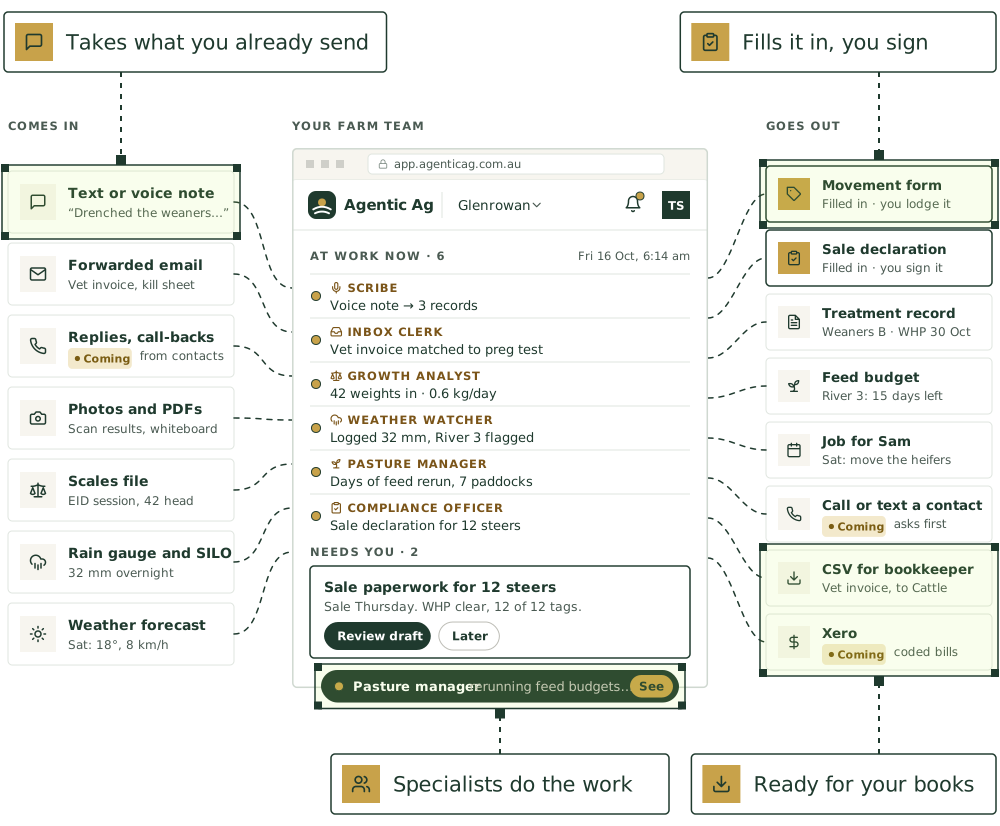
What you send in, and what you get back.
What goes in
- Mobs and animals
- Paddocks and pasture
- Rainfall and weather
- Sensors and collars
- Texts, voice notes, photos, forwarded email
Your team: [AGENT NAME]
- [AGENT NAME] gives each job to the right specialist
- Specialist agents
- Your farm’s history
- Your rules and compliance
- A record of every step
What comes out
- Movement forms, filled in for you to lodge
- Sale declarations, ready to sign
- Audit pack
- Treatment records
- Tasks and summaries
The records, jobs, documents and monitoring it works from come with every plan. See the farm management software
Built for how Australian farms work.
The whole farm, not one part of it
A lot of farm AI covers one thing, usually crops. This team covers livestock, crops, pasture, horticulture and aquaculture in one place.
The paperwork built in
Sale declarations, movement forms, audits and withholding periods are part of the team, not an add-on.
It spots the problem and drafts the fix
It doesn’t stop at a chart. The same team that notices something also prepares what to do about it.
Works for the farm, not the seller
A lot of ag AI is built for the companies that sell to farmers, to reach growers at scale. This team works for whoever owns the farm. [No paid product placements, and no commission on anything it recommends.]
Connecting a system of your own? Read the technical overview.
It answers, then does the job.
A team behind one voice
You talk to [AGENT NAME]. 149 specialists in 19 departments do the work behind it.
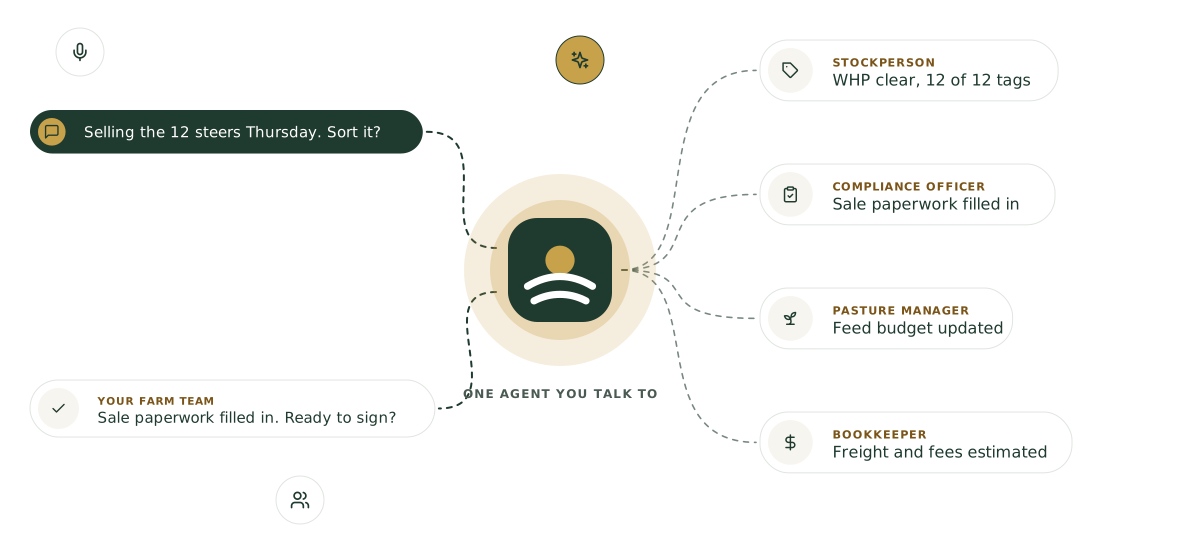
Talk, snap or type
Voice notes from the yards, photos of the whiteboard, forwarded emails. Whatever’s quickest.
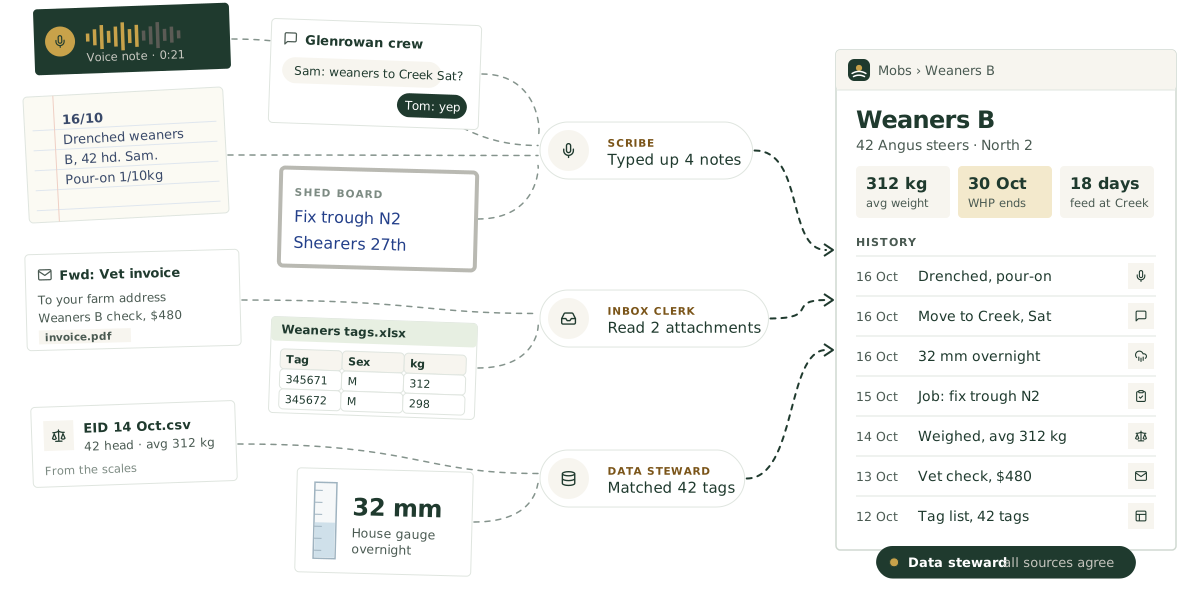
Shows its working
Every suggestion links to the records, rules and weather data behind it.
Sale declaration · cattle
Draft for sign-off- Consignment
- 12 Angus steers
- Destination
- [saleyard]
- Treated with a WHP chemical in the last 35 days?
- No · last drench 2 Sept, WHP clear
- HGP treated?
- No
- Fed by-product stockfeeds?
- No
Remembers your farm
Paddock names, mob nicknames, your vet, your stock agent, the way you do things.
Copes with patchy signal
[Record notes and photos with no signal. They send when you’re back in range.]
Not locked to one AI model
[We use the best model for each job and can swap them as they improve.]
How it connects
Four ways it gets your information, and one set of rules for using it.
It comes to us
We fetch it from your software
We check on a schedule
You send a file
Teach it your rules
Your farm plan, QA manual or vet protocol becomes rules you review.
[Upload a document and the team proposes the rules it found: drench thresholds, minimum groundcover, who to call. Nothing goes live until you’ve read and approved each one.]
Farm management software
One place for the whole farm.
The farm software comes with every plan. The team keeps it up to date, and you can tap records in yourself.
Livestock management
Mobs and single animals, for cattle, sheep and every other species.
Paddock management
Paddocks on a satellite map, with every mob in its paddock and its rest days.
Visitor management
A QR code at the gate, your biosecurity questions and a register for audits.
Tank and trough monitoring
Tanks, troughs, dams and fences, with alarms and days of water left.
Asset tracking
GPS trackers on utes, trailers and gear, and every machine’s service history.
Pregnancy scanning
Scan results on the mob or on each animal: empty, pregnant, twins or triplets.
Breeding and genetics
Joining, dam and sire, and registration numbers, so you can follow a line back.
Sale records
Every sale with its price, buyer and movement document, and the head count kept right.
Weather and rainfall
Rainfall by gauge or paddock, with your district’s weather history behind it.
Integrations
Keep the farm software you already use. See where each connection is up to.
See it on your own records.
Bring a notebook, a spreadsheet or an AgriWebb login. We’ll show you what the team would have done with last month.