Bank reviews and the end of the financial year have one thing in common: someone asks for numbers you had all year but never wrote down in one place. Then you spend a week finding them.
None of this is financial or tax advice. It’s about having the records ready so your accountant and bank manager can give you advice worth having.
The livestock reconciliation
This is the one that trips people up most. Your accountant needs to know how many head you started the year with, how many you finished with, and what happened in between. It feeds into the livestock figures in your tax return, so it has to add up.
An illustrative example for a cattle herd over a year:
- Opening numbers: 520
- Plus natural increase (calves branded or marked): 180
- Plus purchases: 40
- Less sales: 210
- Less deaths: 12
- Less killed for rations: 3
- Expected closing numbers: 520 + 180 + 40 − 210 − 12 − 3 = 515
Then count what’s actually there. If you count 509, there are six head unaccounted for. They might be unrecorded deaths, a sale missed off the list, a counting error, or stock on the neighbour’s place. Find out before you hand it over, and break it down by class (cows, heifers, steers, bulls) because that’s how it’ll be valued.
Split costs by what you farm
If you run cattle and sheep, or stock and crop, code every cost to the part of the farm it belongs to, with shared costs as overheads. Drench to sheep. Fertiliser to the paddock or crop. Diesel split as best you can.
It takes a few seconds per invoice at the time and is very hard to do in June. Without it you know whether the farm made money. With it you know which part did.
Keep the evidence for every sale
- Account sales from your stock agent
- Kill sheets and carcase feedback from the processor
- The vendor declaration for each consignment
- Wool sale statements
- Invoices for private and farm-gate sales
Match each one to the mob it came from. That’s what lets you work out what each mob actually returned, and it answers the bank’s questions about where the income came from.
Fuel and the small claims
If you claim fuel tax credits, you need to show how much fuel went to eligible on-farm use. Keep delivery dockets and a rough log of what the fuel was used for. Your bookkeeper will tell you what’s eligible and what records they need.
What the bank wants to see
Banks vary, but most farm reviews want:
- Stock numbers by class, and how they’ve changed
- Sales and income for the year, and what’s expected next year
- Major costs, and how they compare with budget
- Debt, repayments and cash flow
- Anything unusual: a drought year, a big purchase, a herd rebuild
Bring it before they ask. A short summary with the numbers and a few lines explaining anything that looks odd goes a long way. Banks don’t like surprises, and they like explanations after the fact even less.
A monthly habit
Once a month, spend twenty minutes on it: check the stock numbers still make sense, code anything uncoded, file the sale paperwork and add to the list of questions for the accountant. Year end becomes a tidy-up instead of an archaeology dig.
How your AI team helps
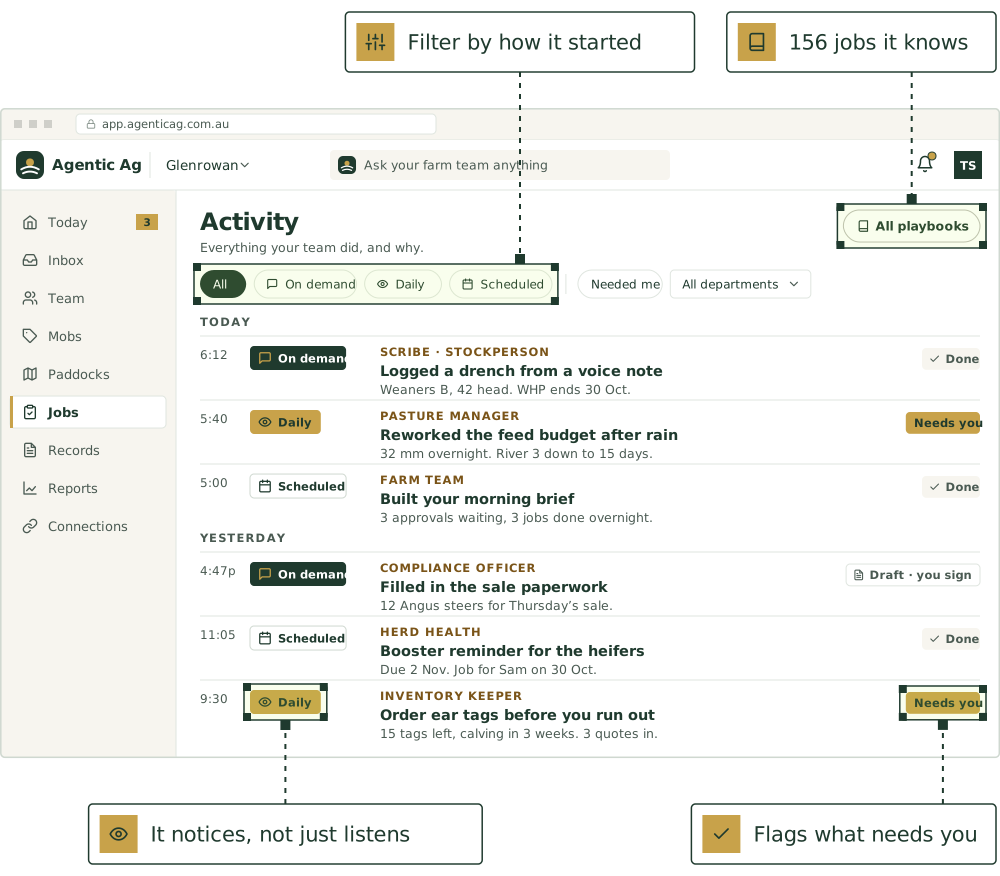
Forward an invoice to [AGENT NAME] and the Bookkeeper codes it to the right part of the farm for you to approve. At year end, the Reporting clerk reconciles opening and closing livestock numbers from the records the team has kept all year, and flags what doesn’t add up.
Before a bank review, it pulls stock numbers, sales and costs into a draft summary for you to check before it goes anywhere. The Business analyst works out cost of production for each part of the farm each quarter. Through the year, it notes things worth raising with your accountant, like a big sale or a change in herd numbers. It doesn’t give tax or financial advice. Your accountant does.