Getting away is hard. Getting away and not taking phone calls is harder. Most of those calls come from one thing: the person running the place knows what to do but not how you do it.
A good handover pack fixes most of that. It takes an evening to put together the first time, and much less after that.
Start with a walk
If you can, spend half a day driving the place together. Every gate, every trough, every pump, and the paddock everyone calls something different from what’s on the map. Paper doesn’t replace this, but it does stop the relief manager having to remember all of it.
What goes in the pack
- A map with paddock names as you say them, water points, gates, yards, sheds and any no-go areas.
- Mobs: where each one is, how many, what class, and anything to watch, like a cow close to calving or a lame ram.
- Treatments in the last few weeks, and any withholding periods still running. Nothing on that list gets sold or killed until it’s clear.
- Water: the water run, which troughs and tanks to check, how often, how to restart each pump, and what to do if one fails.
- Jobs due while you’re away, and jobs that can wait.
- Feeding: who gets what, how much, and where it’s kept.
- Planned moves, and the rule for when to move a mob early.
Contacts
- Your mobile, and whether you’re reachable
- A neighbour who knows the place
- Your vet, and the after-hours number
- Your stock agent
- Contractors booked while you’re away
- The electrician, plumber or pump person
- Local fire brigade and the emergency services number
Keys, codes and the small stuff
- Where the keys live for the ute, bikes, sheds and fuel tank
- Gate and alarm codes, and the wifi password
- How to read the fuel tank, and who to ring for a delivery
- Which bike or vehicle they can use, and which they can’t
- Bin day, the mail run and anything else the household relies on
It’s the small stuff that generates the most phone calls. Ten minutes on this list saves a lot of them.
Decisions and money
Spell out what they can decide on their own and what needs a call to you. A useful rule is a dollar limit: anything under it, use your judgment; anything over it, ring first. Do the same for stock. Can they call the vet on their own? Yes. Can they sell anything? Probably not.
Say how purchases get paid for, where receipts go, and who to call if a supplier needs an account number.
Safety
A relief manager working on your place is a worker on your place, and you have duties to them under work health and safety law. Before you leave:
- Walk them through known hazards: dodgy bridges, power lines, steep sides, bulls with opinions.
- Check they have the tickets for any machinery they’ll use.
- Agree a check-in if they’ll be working alone, and what happens if they miss it.
- Make sure they know the fire plan, and what to do on a high fire danger day.
Records while you’re away
Agree how things get written down: treatments, deaths, mob moves, rain. If you come back to a week of “all good” and nothing else, you’ve lost a week of records. One message a day with what happened is enough.
When you get back
Sit down for half an hour. What went wrong, what was confusing, what they’d want in the pack next time. Update it then, while it’s fresh.
How your AI team helps
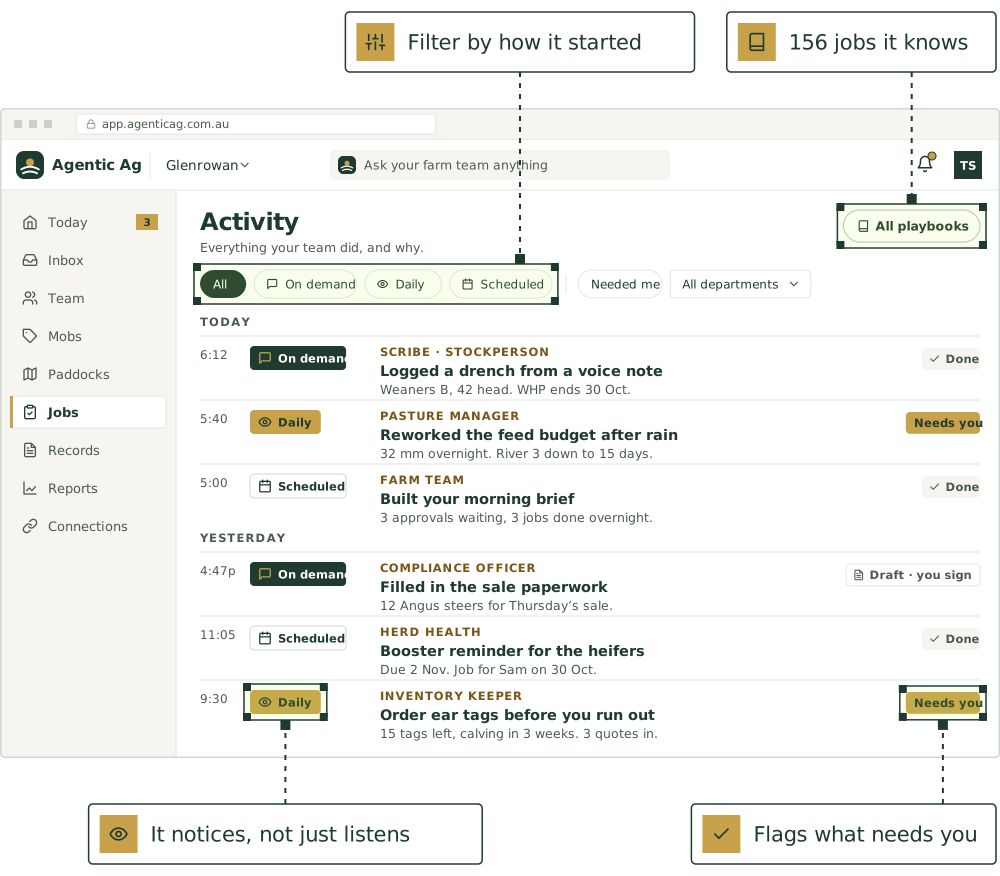
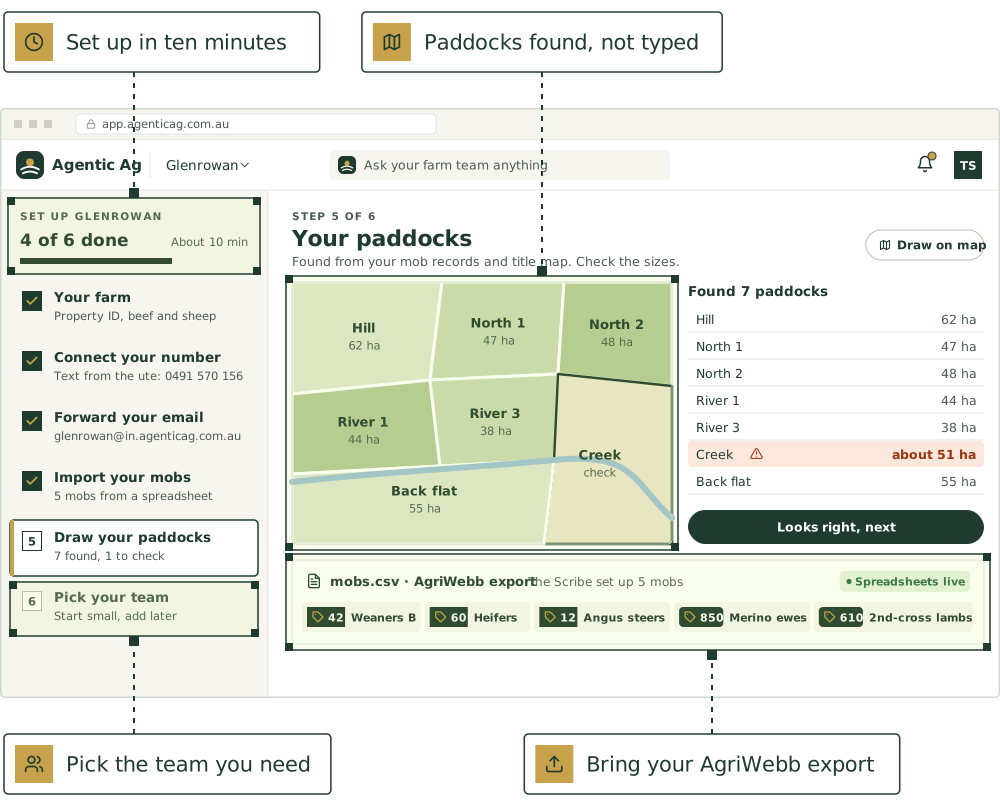
Text [AGENT NAME] “I’m away from the 10th for a week” and the Operations lead pulls together what someone needs to run the place from the records the team already keeps: mobs and where they are, the water run, jobs due, open withholding periods and contacts. You check it and add what only you know.
While you’re away, the relief manager can text the agent with questions about your records, like which paddock the weaners are in or when the withholding period on the heifers ends, and get the weekly plan and morning brief you’d normally get. It answers from your records. Judgment calls still go to whoever you’ve said can make them.